The short answer
Dermaplaning is a facial that uses a sterile blade to gently sweep away dead skin and fine peach fuzz, leaving skin smoother and brighter. It is exfoliation, not shaving, and your hair grows back exactly as it was.
Dermaplaning is all over social media, usually as an oddly satisfying video of a blade gliding across someone’s cheek. Behind the videos there is a genuinely useful facial, but also a lot of confusion, especially the worry that it will leave you with a five o’clock shadow. Here is a plain guide to what dermaplaning actually is, what it does for your skin, who it suits, and the truth about that hair myth.
What is dermaplaning?
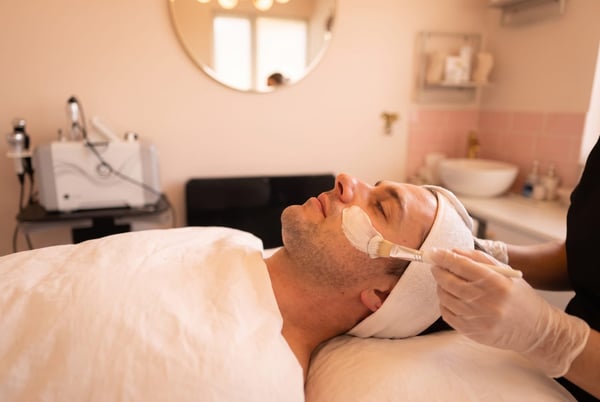
Dermaplaning is a facial exfoliation treatment. A trained therapist holds a sterile surgical blade at around a 45 degree angle and gently sweeps it across your skin, lifting away the outermost layer of dead skin cells along with the fine vellus hair, the soft peach fuzz, on your face (WebMD, Cleveland Clinic). It is a surface treatment, not a deep or invasive one, so there is essentially no downtime beyond a little possible redness, and a session usually takes around 30 minutes.
The key word is exfoliation. It is easy to assume dermaplaning is only about hair removal, but the peach fuzz is really a bonus. The main event is sweeping off the dull, dead top layer of skin to reveal the fresher skin underneath.
Dermaplaning is exfoliation with a blade, not shaving. The peach fuzz coming off is a bonus, the real job is lifting away the dull, dead top layer of skin.
What dermaplaning actually does for your skin
The immediate payoff is texture. With that dead layer and the fine hair gone, skin feels noticeably smoother and looks brighter straight away, which is why people often book it before an event. Makeup is the other big one: foundation sits flat and even on freshly resurfaced skin, rather than clinging to dry patches or catching on peach fuzz (WebMD). Your skincare can also absorb a little better once the surface is not blocked by dead cells.
It is worth being honest about what it does not do, though. Dermaplaning is a resurfacing treatment, so the glow is real but temporary, and it fades as your skin naturally renews over the following few weeks. It is not a permanent change, it will not stop your skin ageing, and a salon dermaplaning facial is not the same as the deeper medical procedure that is sometimes used to soften acne scarring (Cleveland Clinic). It will not clear blackheads either, since those sit inside the pore rather than on the surface, so if that is your concern our guide to how to get rid of blackheads is the better place to start. If your main goal is scarring or deeper concerns, that is a conversation for a different treatment, and we would tell you so.
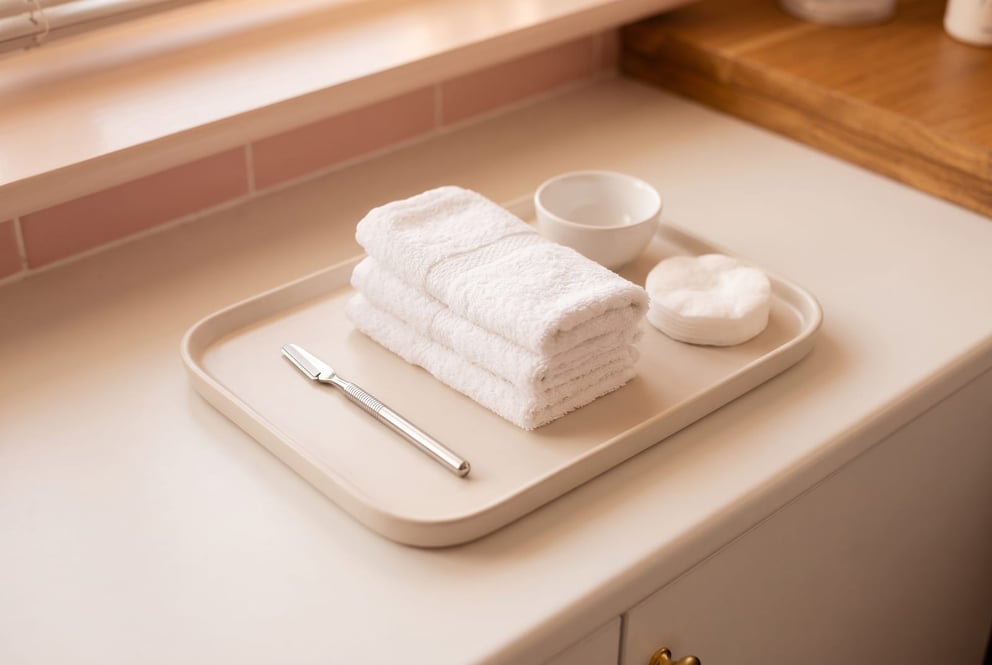
Does dermaplaning make hair grow back thicker?
This is the question that stops most people booking, so let us settle it. No, dermaplaning does not make your hair grow back thicker, darker or coarser. The fine vellus hair on your face grows back exactly as it was (WebMD, Cleveland Clinic).
The reason is simple. The thickness, colour and growth rate of a hair are set by the follicle beneath the skin, and dermaplaning only cuts the hair at the surface. It never touches the follicle, so it physically cannot change what grows back. This is not new or controversial, it is the same reason shaving anywhere on the body does not thicken hair, something clinical studies confirmed back in 1928. The one real thing you might notice is that regrowth can feel slightly blunt for a few days, because the hair has been cut straight across instead of tapering to its natural fine tip. It softens as it grows out, and the peach fuzz is back to normal within about three to four weeks.
How a dermaplaning facial goes at NU Beauty
Here is how it tends to play out. Say you have got a wedding on Saturday, your foundation has been looking patchy and clinging to little dry flakes, and you have noticed the light catching the fuzz on your cheeks in photos. You come in on the Wednesday, giving your skin a couple of days to settle before the day.
We start with a proper cleanse and a look at your skin to check dermaplaning is right for you that day. Then the actual dermaplaning is quick and surprisingly relaxing, a series of light, feathery strokes across your forehead, cheeks, jaw and upper lip while your therapist keeps the skin taut. There is no pain, most people describe it as a faint scratchy tickle. We finish with a soothing product and an SPF. You walk out with skin that feels like glass, and on Saturday your makeup goes on beautifully and photographs clean.
If you are shorter on time, the express dermaplaning facial (£38.50) does the resurfacing on its own. The standard dermaplaning facial (£55) gives it more room to breathe, and the dermaplaning deep cleaning facial (£88) adds a deeper cleanse and extractions if congestion or blackheads are your main concern. All three are on our advanced facials menu at Haverhill.
Who should skip dermaplaning, or wait
Telling you when not to book is how we earn the times you should. Dermaplaning suits most skin types, but there are clear times to hold off.
If your skin is simply on the sensitive side rather than actively flaring, that is usually fine, and it is exactly the sort of thing we check at the start of your appointment before we begin.
Dermaplaning and the other ways to exfoliate
Dermaplaning is one of a few ways to resurface skin, and they suit different goals. Here is how the main options compare, so you can see where dermaplaning fits.
| Dermaplaning | Chemical peel | At home facial razor | |
|---|---|---|---|
| How it works | A blade physically lifts dead skin and fine hair | Acids dissolve the bonds holding dead skin cells | A light razor skims the surface |
| Removes peach fuzz? | Yes | No | Yes, lightly |
| Best for | Instant smoothness and glow, better makeup | Pigmentation, texture, breakouts over time | Quick maintenance between facials |
| Downtime | None to minimal | Can peel or flake for a few days | None |
| At NU Beauty | Yes, Haverhill | Yes, Haverhill | This is a home option |
The honest summary is that an at home facial razor is fine for a quick tidy between treatments, but it is a lighter exfoliation than a professional dermaplaning facial, where the blade, angle and pressure are controlled and hygiene is properly managed (Cleveland Clinic). If your skin concern is pigmentation or you want a deeper reset, a chemical peel may serve you better, and we offer both, so we can point you to whichever suits your skin rather than upselling the one you walked in asking for. And if congestion and dehydration bother you more than hair or texture, our guide to what a HydraFacial is explains the multi-step facial that deep cleans the pores and floods the skin with serums.
Looking after your skin afterwards
Freshly dermaplaned skin has lost its top layer, so it is a little more exposed than usual, especially to the sun. The aftercare is short and genuinely matters (WebMD, Healthline):
- Wear a broad spectrum SPF 30 or higher every day, and be extra diligent for the first week, as unprotected sun can undo the results or cause patchy pigmentation on the new skin.
- Keep it simple for a couple of days: a gentle moisturiser is your friend. Hold off on strong acids, retinol and gritty scrubs for a few days so you do not over do it.
- Do not pick or rub while any slight redness settles, which is usually within a day.
Dermaplaning at NU Beauty in Haverhill
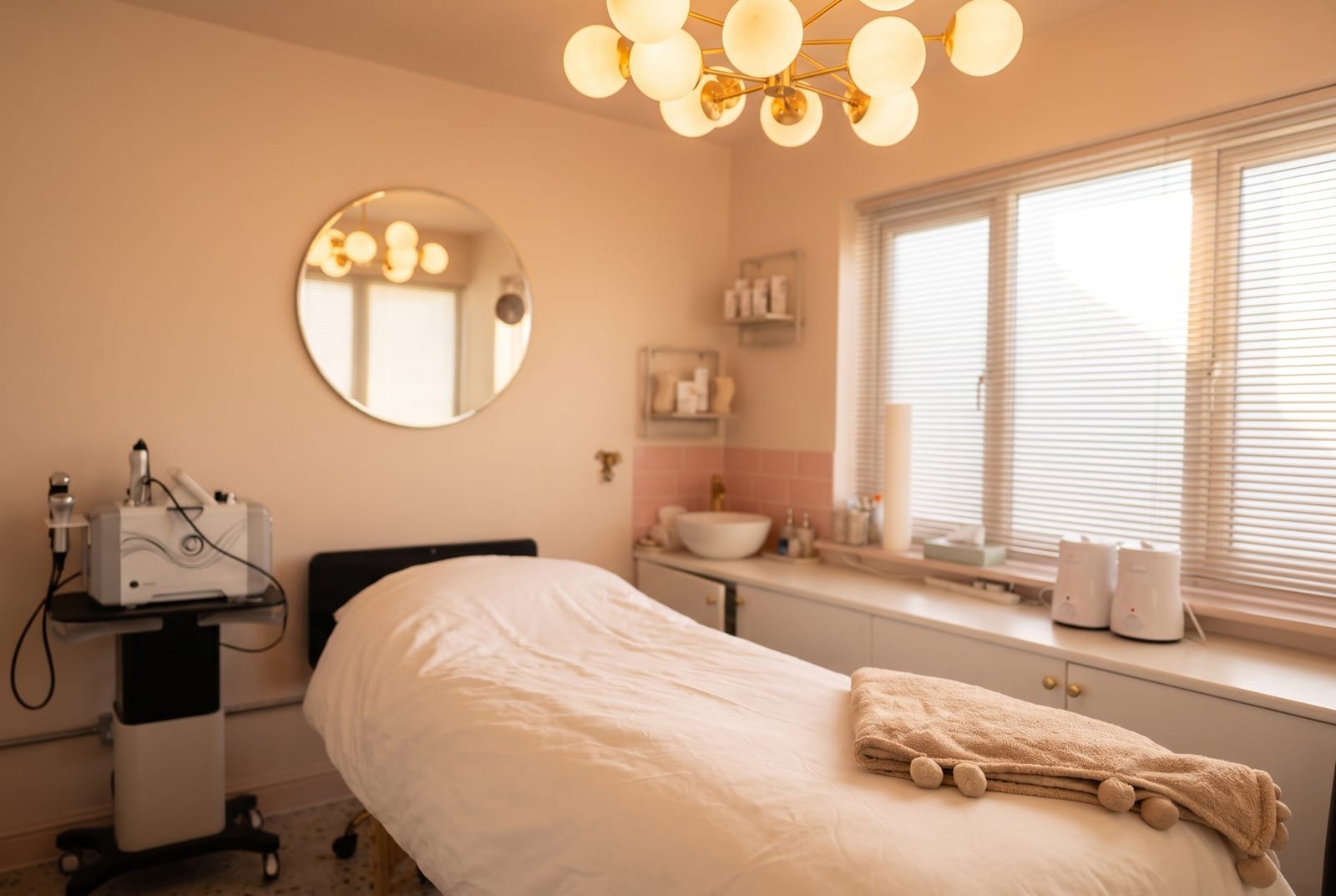
We carry out dermaplaning at our Haverhill salon, as part of one of the fuller advanced facials menus in west Suffolk. Your therapist checks your skin first, talks through whether dermaplaning or a gentler facial is the better call that day, and works at your pace. You will find dermaplaning alongside our other resurfacing and results led treatments on the advanced facials menu. If you are making a proper afternoon of it, our guide to what an Indian head massage is covers the treatment that melts away neck and shoulder tension. Sorting your brows or lashes at the same time? Our guides to what HD brows actually are, how long brow lamination lasts and how long a lash lift lasts are all good next reads.
The bottom line
Dermaplaning is a quick, gentle facial that exfoliates away dead skin and fine peach fuzz with a sterile blade, leaving skin instantly smoother, brighter and ready for makeup. It is not shaving, and it does not make your hair grow back thicker or darker, that is a myth. It suits most skin, as long as you are not actively breaking out or flaring, and the results are a lovely temporary glow rather than a permanent change. If you fancy that just had a facial feeling before an event, or simply want smoother skin, come and have a chat with us at Haverhill and we will talk through whether it is right for you. Wondering if it suits male skin too? Do men need facials? covers why the answer is usually yes.
Frequently asked questions
What is dermaplaning?
Dermaplaning is a facial exfoliation treatment. A trained therapist holds a sterile surgical blade at roughly a 45 degree angle and gently sweeps it across your skin to lift away the outermost layer of dead skin cells and the fine vellus hair, or peach fuzz, on your face. It is not a deep or invasive procedure, it simply resurfaces the very top of the skin, so you are left with a smoother, brighter finish and no real downtime. A session usually takes around 30 minutes. It is one of the treatments on our advanced facials menu at our Haverhill salon.
Does dermaplaning make hair grow back thicker or darker?
No. This is the most common myth about dermaplaning, and it is not true. The fine peach fuzz on your face grows back exactly as it was, as fine, soft vellus hair. Cutting a hair at the surface of the skin cannot change the follicle underneath, so it cannot change how thick, dark or fast the hair grows. This was actually shown in studies as far back as 1928. The one thing you may notice is that the regrowth can feel a little blunt at first, because it has been cut straight across rather than tapering to a fine point, but it softens as it grows out.
Is dermaplaning just shaving your face?
It uses a blade, so the principle is similar, but it is not the same as running a razor over your face at home. Dermaplaning uses a single sterile surgical blade held at a precise angle by a trained therapist, and the goal is exfoliation, lifting away dead skin cells across the whole face, not just removing hair. An at home facial razor gives a lighter tidy up of the surface, which is fine for maintenance, but it does not exfoliate as effectively or as safely as a professional treatment, where the blade, the angle and the pressure are all controlled for you.
Who should not have dermaplaning?
Dermaplaning is not recommended if you have active or inflamed acne, rosacea, eczema, psoriasis or a cold sore outbreak, because drawing a blade across broken or flaring skin can irritate it or spread a breakout. It is also best avoided on sunburnt skin. If you have taken the acne medication isotretinoin, often known as Roaccutane, you should wait at least six months after finishing your course, as your skin is more fragile. If any of this applies to you, we will happily suggest a gentler facial instead, or wait until your skin has settled.
How often should you have dermaplaning?
Around every three to four weeks is the usual guidance, which lines up with the skin's natural renewal cycle and with how long it takes the fine hair to grow back. Many salons quote every four to six weeks, so anywhere in that window is sensible. The results are not permanent, they fade as your skin naturally sheds and the peach fuzz returns over three to four weeks, so it is a treatment people tend to repeat rather than have once. There is no harm in stopping whenever you like, and your skin and hair simply carry on as normal.
How much does dermaplaning cost at NU Beauty?
We offer dermaplaning at our Haverhill salon as part of our advanced facials menu. There is an express dermaplaning facial for a quick resurface, a standard dermaplaning facial, and a dermaplaning deep cleaning facial that adds a fuller cleanse and extraction. You will find the current prices on our advanced facials menu. Which one suits you depends on how much time you have and whether you want dermaplaning on its own or as part of a longer facial, and we are always happy to advise when you book.