The short answer
Blackheads are trapped oil and dead skin, not dirt, so scrubbing will not shift them. A daily salicylic acid clears most over a few weeks. Never squeeze them; for stubborn ones, book a professional extraction facial.
Blackheads are one of those things almost everyone deals with at some point, and one of the most misunderstood. There is a lot of dubious advice out there, from scrubbing your face raw to sticking strips on your nose, and most of it either does nothing or makes things worse. So here is a plain, honest guide to what actually causes blackheads, the at-home routine that works, what to leave well alone, and when a professional facial is worth booking.
What actually causes blackheads (and why scrubbing makes them worse)
A blackhead is a pore that has become clogged with a mix of oil, called sebum, and dead skin cells. The proper name for it is an open comedo. Because the top of the pore is open to the air, the surface of that little plug oxidises and darkens, a bit like a slice of apple turning brown once you cut it. That dark dot is the key misunderstanding: it is not trapped dirt, and you are not seeing grime (American Academy of Dermatology, NHS).
That one fact changes how you should treat them. If blackheads were dirt, scrubbing harder would clear them. Since they are actually a plug of oil and skin sitting inside the pore, the answer is not more scrubbing, it is the right ingredients used gently and consistently. Scrub too hard and you strip the skin, which only prompts it to make more oil and refill the pores you just irritated.
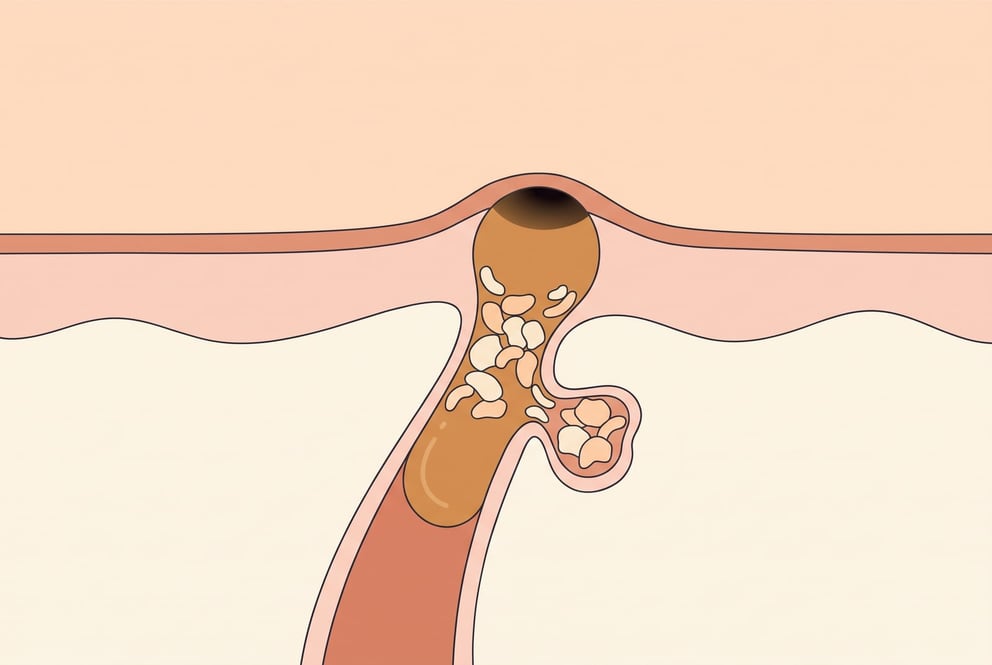
A blackhead is the open version. Its close cousin the whitehead is the same clog, but closed over at the surface, which is why it stays pale instead of darkening. The same thing happens on the body, which is where a lot of the dark dots people call strawberry legs come from, though on legs there are a few other causes in the mix too.
If you feel like you get more than your fair share, it usually comes down to how much oil your skin makes, and that is largely down to hormones. This is why blackheads are so common through your teens, when hormones ramp up oil production, and why they can flare for some people around their period (NHS, British Association of Dermatologists). They tend to gather on the nose, chin and forehead, simply because that is where skin is oiliest. What is not to blame is your hygiene: most of what causes a blackhead happens beneath the surface, inside the pore, so how clean the outside of your skin is makes very little difference.
One more thing worth knowing before you start treating anything: a lot of what people call nose blackheads are not blackheads at all. Look closely and you will often see lots of tiny, evenly spaced greyish dots, which are sebaceous filaments, a normal, healthy part of how your skin channels oil to the surface. Unlike a true blackhead, they do not have a firm plug and they cannot be got rid of for good, because they are meant to be there (Cleveland Clinic). Chasing them as if they were blackheads is exactly how people end up over-scrubbing. A true blackhead has a darker, more defined plug, and that is the one worth treating.
The at-home routine that works: salicylic acid, step by step
The good news is that most blackheads respond well to a simple routine you can do yourself. You do not need a cabinet full of products, you need a couple of the right ones used regularly.
Salicylic acid is the one that matters most. It is a BHA, which means it is oil-soluble, so unlike a water-based exfoliant it can actually get down into an oily pore and break up the plug of sebum and dead skin from the inside. Dermatologists rate it as the go-to ingredient for blackheads and whiteheads specifically (AAD, Healthline). Look for a gentle leave-on cleanser, toner or serum and start a few times a week, building up as your skin gets used to it.
A retinoid is the other heavy hitter. Retinoids speed up how quickly your skin turns over its cells, which helps stop pores clogging in the first place. One thing worth knowing if you are in the UK: the prescription retinoid adapalene, which you might see recommended on American websites as an over-the-counter buy, is prescription-only here, so you would need a pharmacist or GP for that one. An over-the-counter cosmetic retinol is a gentler starting point you can pick up yourself.
A few other things genuinely help around the edges: a clay mask once a week to draw out excess oil, and swapping any gritty scrubs for gentle chemical exfoliation. What tends not to help for plain blackheads is benzoyl peroxide, which is really aimed at the red, inflamed spots caused by bacteria rather than the simple oil-and-skin plug of a blackhead (Healthline).
What to avoid: popping, pore strips and over-exfoliating
We know the urge to squeeze is strong. But squeezing a blackhead with your fingers tends to push part of the plug deeper rather than lifting it cleanly, and it can introduce bacteria, trigger inflammation and leave you with a scar or a dark mark where a harmless blackhead used to be. The NHS puts it plainly: do not try to clean out blackheads or squeeze spots, because it can cause permanent scarring (NHS).
Pore strips are the other big temptation, and they are more theatre than treatment. They pull off the very top of whatever is sitting at the surface, which looks dramatic, but they do nothing about the oil gland that keeps refilling the pore, and they can irritate and dry the skin. Toothpaste, so-called pore vacuums and the rest of the internet’s home remedies fall into the same bucket: at best pointless, at worst irritating.
The other trap is over-exfoliating. It is tempting to reach for a gritty scrub or stack several active ingredients at once when blackheads are not shifting fast enough, but that just leaves skin red, sore and more prone to breaking out, not less clogged. One gentle salicylic acid product, used consistently, does far more than several harsh ones used all at once. None of these shortcuts address the actual cause, which is oil and dead skin sitting inside the pore, not on top of it.
When a professional extraction facial is worth it
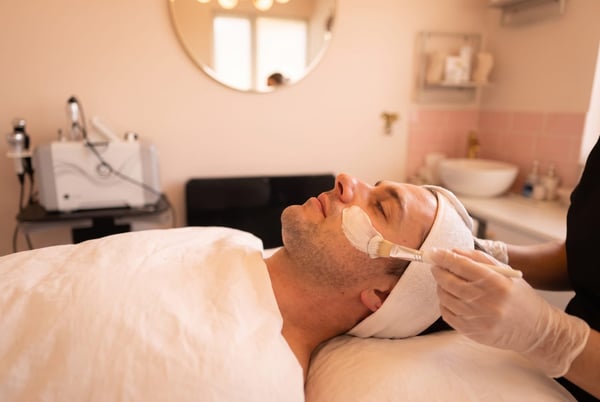
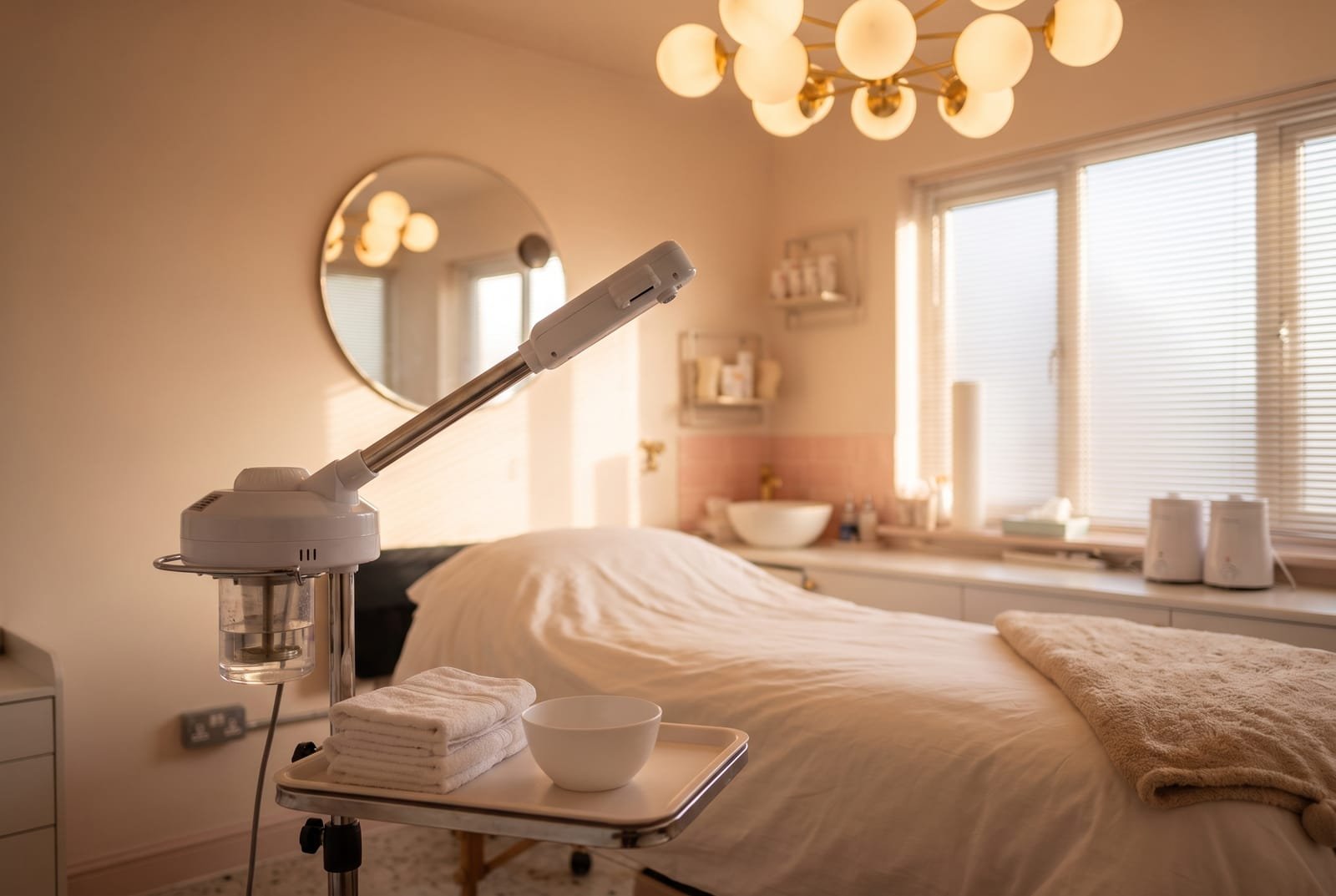
Say a mum brings her teenage daughter in to our Haverhill salon, worried about blackheads all across her nose. The first thing our therapist does is actually look at the skin properly, and often half of what looked like blackheads turns out to be those normal sebaceous filaments. For the genuine blackheads, the skin is warmed and softened first with gentle steam, which loosens the plugs, and then they are lifted out with a sterile extraction tool using slow, even pressure, rather than the pinch-and-squeeze that does the damage at home. She goes home with a simple salicylic acid routine to keep it up, because the facial is the head start, not the whole job.
That is the real difference between a salon extraction and doing it yourself: trained hands, a sterile tool, softened skin and even pressure. Dermatologists are clear that extractions are best left to a professional for exactly this reason (Cleveland Clinic). It is worth booking one when your own routine has stalled on a stubborn, congested patch, or you want a proper reset before an event.
At our Haverhill salon, the treatments that target congested, blackhead-prone skin are our Extraction facial (currently £69.30) and our Hydra-facial (£88), which uses gentle suction to deep clean and clear the pores. For younger skin, the Teen ELEMIS facial (£38.50) is a gentler introduction.
| Option | What it does for blackheads | Worth it for |
|---|---|---|
| Salicylic acid at home | Dissolves the oil-and-skin plug inside the pore, and prevents new ones | Everyone, as the daily foundation |
| Professional extraction facial | Clears out congested pores there and then, safely, with softened skin | A stubborn, congested nose or a reset before an event |
| Hydra-facial | Deep cleanses and uses gentle suction to clear pores, plus hydration | Congestion with dullness, when you also want glow |
| Pore strips and squeezing | Removes the surface tip only, and risks irritation or scarring | Nothing, honestly |
The pattern is simple: a good home routine does most of the work, and a professional facial is the boost for the bits that will not budge. One does not replace the other. If you are timing any of this around a big event, our guide to prom makeup that actually lasts the night has a realistic prep timeline that works for skin as much as makeup.
How long it takes to see results
Be patient with this. Whether you go the home route, the salon route or both, blackheads take a while to shift, because you are changing how the skin behaves rather than just removing what is there today. Most people start to see a difference over about four to eight weeks, with meaningful clearing closer to twelve weeks, or three months, of consistent care (AAD, Cleveland Clinic).
And they are never gone for good, because your pores keep producing oil. A cleared pore can fill again within a month, so the honest aim is keeping blackheads in check with a steady routine, not curing them once and forgetting about them. That is not a failure of any product, it is just how skin works.
Related professional treatments
Blackheads are not the only reason to book an advanced facial at our Haverhill salon. If your skin is oily and blackhead-prone but also looking a bit tired or uneven, a professional Chemical peel (£70.20) uses salicylic acid at a higher strength than you can buy over the counter, so it clears and prevents at once. And if smoother, brighter skin and softer fine hair is more the goal than congestion, dermaplaning is lovely for that, though it is worth knowing upfront that it does not treat blackheads, since those sit inside the pore rather than on the surface, so we would not point you there if congestion is your main concern.
The bottom line
Getting rid of blackheads is not about scrubbing harder or squeezing, it is about the right, gentle routine kept up over time, with salicylic acid doing the heavy lifting. Leave the strips and the squeezing alone, be realistic that they need managing rather than curing, and know that a good chunk of what is on your nose is probably normal skin doing its job. If the stubborn ones are getting you down, a professional deep-cleanse or extraction facial at our Haverhill salon is the safe way to clear them, and we will happily set you up with a routine to keep them at bay. Not sure what your skin needs? Just ask when you book and we will talk it through first. If nose congestion is more of a men’s-skin thing for you, do men need facials? covers why male skin congests differently in the first place.
Frequently asked questions
Is it OK to squeeze blackheads?
It is best not to. Squeezing at home tends to push some of the plug deeper into the pore rather than lifting it out, and it can introduce bacteria from your fingers, cause inflammation and leave you with permanent scarring or dark marks. The NHS specifically advises against trying to clean out blackheads or squeeze spots because it can cause lasting scarring. If a blackhead is really bothering you, the safer route is a professional extraction, where a trained therapist softens the skin first and uses a sterile tool with even pressure. At our Haverhill salon that is part of our deep-cleanse and extraction facials.
Why is my face so full of blackheads?
Usually because your skin is producing plenty of oil and it is mixing with dead skin cells and clogging your pores, which is completely normal and very common. It is driven mostly by hormones, which is why blackheads are so common in your teens and can flare around your period, and it tends to show up most on the nose, chin and forehead where skin is oiliest. It is not a sign that you are dirty or not washing enough. The cleanliness of your skin has no effect on this, since it is happening inside the pore, not on the surface.
Does toothpaste get rid of blackheads?
No, and it is worth skipping. Toothpaste is made for teeth, not skin, and the menthol and other ingredients can irritate and dry out your face without doing anything to clear the pore. It is one of those home remedies that gets passed around online but has no real evidence behind it. If you want something that genuinely works on a blackhead, you want salicylic acid, which is oil-soluble and can actually get inside the pore to dissolve the plug of oil and dead skin.
How do you get rid of blackheads on your nose?
The same way as anywhere else, with a gentle, consistent salicylic acid routine rather than strips or squeezing. One honest thing worth knowing: a lot of what people call nose blackheads are actually sebaceous filaments, which are the tiny, evenly spaced greyish dots that are a normal part of how your skin works. They are not a fault and they cannot be permanently removed, only kept in check. A true blackhead has a darker, firmer plug. Salicylic acid keeps both looking their best, and a professional facial can deep clean the area safely.
Can you get rid of blackheads permanently?
Not permanently, and anyone promising a forever fix is overselling it. Your pores keep producing oil, so blackheads come back if you stop looking after your skin, and a cleared pore can fill again within about a month. The realistic goal is keeping them under control, not curing them once. That means a steady at-home routine built around salicylic acid, and topping it up with the occasional professional deep-cleanse facial if you want a hand with the stubborn ones. Consistency does far more than any one-off treatment.
Do blackhead extraction facials actually work?
Yes, for clearing out congested pores in the moment and giving your skin a proper deep clean, as long as you go in with realistic expectations. A trained therapist softens the skin with warm steam and uses a sterile tool to lift the plugs out with even pressure, which is far safer than squeezing at home. What a facial will not do is stop blackheads coming back on its own, so it works best alongside a good home routine rather than instead of one. At our Haverhill salon it is part of our advanced facials menu.