The short answer
An Indian head massage is a seated, clothed treatment working the upper back, shoulders, neck, scalp and face to release tension. Most people find it deeply relaxing, and it eases tight shoulders and tension headaches.
If you spend your days hunched over a screen or a phone, the tension tends to settle in the same places: the top of your back, your shoulders, your neck and right up into your scalp. An Indian head massage goes straight for exactly those spots. Here is what it actually is, what it genuinely helps with, and the honest bits most spa pages leave out.
What is an Indian head massage?
An Indian head massage is a treatment that works the upper back, shoulders, upper arms, neck, scalp and face, usually while you sit upright and stay fully clothed. It uses firm but soothing strokes, along with gentle pressure on points around the head, to release built-up muscle tension and help you relax. Oil is optional, and a typical treatment runs around 20 to 45 minutes.
That upper-body focus is the whole point, and it lines up with how we describe it at the salon: it eases tension in the top of the back, the shoulders and the head, which makes it a favourite with people who get tension headaches.
Where it comes from
The treatment has deep roots in the Ayurvedic tradition of India, where oiling and massaging the head has been part of everyday care for generations, passed down in families and offered by barbers as part of grooming. The word behind it, champi, means to press or knead the head, and it is also where the English word “shampoo” comes from.
The version most UK salons offer today was shaped by Narendra Mehta, a blind osteopath who came to England in the 1970s, went back to India to study traditional head massage, and introduced his method in London in 1981. His real contribution was to extend the treatment beyond the scalp to take in the face, neck, shoulders and upper arms, the areas where we all hold stress. That broader sequence is what separates an Indian head massage from a plain scalp rub.
What actually happens in a session
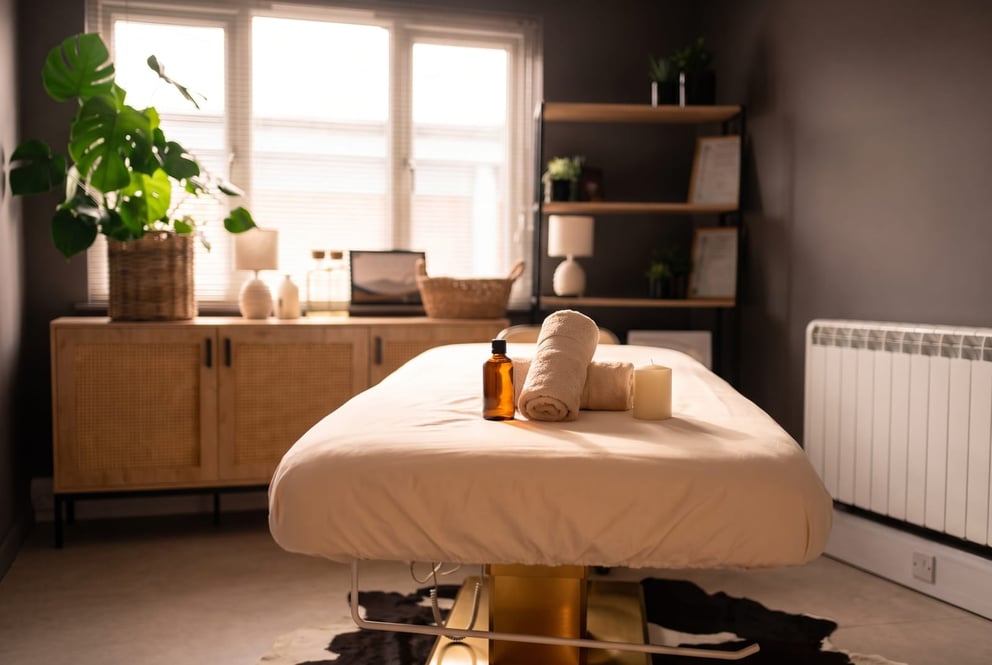
You stay seated and clothed, so there is no getting changed and no couch. Your therapist usually starts on the upper back and shoulders, works up through the arms and neck, then moves to the scalp and finishes around the face and ears. If you have chosen an oil treatment, a light oil goes through the hair and scalp; if not, the whole thing is done dry and is every bit as relaxing, which is the one to pick if you are heading straight back to work.
What an Indian head massage is genuinely good for
Here is where we would rather be straight with you than repeat the usual spa claims.
The strongest benefit, and the one with real evidence behind it, is relaxation and stress relief. Cancer Research UK notes that massage “can help lift your mood, improve your sleep and enhance your well being,” and a small controlled study of office workers found that regular scalp massage measurably lowered stress-hormone levels and blood pressure in the short term. Most people simply feel lighter and calmer when they walk out, and that is genuinely worth having.
There is also reasonable evidence that massaging the head, neck and shoulder muscles helps with tension-type headaches and the muscular tightness that comes from desk work and stress. This is the everyday reason most of our clients book in.
The relaxation is real and the tension relief is real. The "it grows your hair and flushes out toxins" claims are not, so we will not sell you those.
We will not tell you it grows hair, detoxes your body or flushes out toxins. The scalp-massage-and-hair-growth studies people cite are tiny, one followed just nine people, or based on people rating their own hair in a survey, and none of them tested Indian head massage. Regular scalp massage may help a healthy scalp and it is lovely and relaxing, but it is not a hair-loss treatment, and there is no “toxin flush” happening. If hair loss is your real worry, a GP or trichologist is the right call.
A worked example: the tension headache after a week at a desk
Picture a fairly typical Friday client. They have had a heavy week at a laptop, their shoulders are up around their ears, and a dull headache has been creeping in from the base of the skull since Wednesday. That pattern, tight upper traps and neck feeding a tension headache, is about the most common reason people come in for this.
We would sit them down, ask where it feels worst, and start slow and broad across the upper back and shoulders to warm everything up before working into the knotted spots either side of the neck. By the time we reach the scalp, most people have visibly dropped their shoulders. They chose a dry treatment because they had plans that evening, so no oil, no washing their hair later. Walking out, the headache has usually eased and the neck feels looser. That evening they sleep well, and the honest note we always add is that it is a reset, not a fix, so if that headache pattern keeps coming back week after week, it is worth a word with your GP too.
When we would say wait
Telling you when to skip it matters more than filling the diary. An Indian head massage is safe and gentle for most healthy people, but please check with your GP first, or leave it for now, if you:
- Have had recent surgery, or a recent head or neck injury such as whiplash.
- Have a history of blood clots (thrombosis or embolism), as pressure is not advised in that case.
- Have uncontrolled high or low blood pressure, a heart condition, or a neck or spine condition.
- Have an active scalp infection, sore or broken skin where we would be working.
- Are pregnant. It is not off limits, but tell us and check with your midwife or GP, and we will keep it gentle.
None of this is meant to alarm you. It follows standard massage safety guidance, including Cancer Research UK’s advice to check with your doctor first if you are pregnant or have a heart condition, and to avoid massage over broken or bruised skin. A quick check keeps things safe. Do let us know about any nut or other allergy too, since some massage oils are nut based.
Afterwards, a few people feel briefly tired, a little lightheaded or mildly achey. That is normal and usually settles within a couple of hours, and then most people feel clearer and more alert.
Indian head massage, or another massage? Your options
An Indian head massage is not the only way to unwind, and it suits some people better than others. Here is the honest line-up so you can pick what fits.
| Treatment | Best for | Worth knowing |
|---|---|---|
| Indian head massage | Tension in the neck, shoulders and scalp, desk-and-screen stress, a quick reset | Seated and clothed, no undressing, oil optional |
| Back, neck and shoulder massage | The same upper-body tension without the scalp or oil element | On the couch, a bit more focused on the muscles |
| Full body or Elemis massage | Tension spread all over, not just the upper body | Longer, you undress and lie on the couch |
| Deep tissue or sports massage | Stubborn knots, recovery, firmer pressure | Can feel intense and leave next-day soreness |
| At-home scalp massage | Topping up relaxation between visits, on a budget | Free, but you cannot properly relax your own neck and shoulders |
If your tension sits mostly in the neck, shoulders and head, or you fancy a gentle first massage, the Indian head massage is the natural pick. If you want firmer work on a specific stubborn area, one of our deeper massages may suit you better, and we are always happy to point you the right way. Our full massage menu, and both our NU and Elemis Indian head massage options, are on the massage page, booked at our Haverhill salon.
If you are making a proper afternoon of it, plenty of our clients pair the massage with something else while they are in, so our guides to what dermaplaning is, what HD brows are and how long a lash lift lasts are all worth a read before you book.
Aftercare: what to do, and what to skip
There is no strict routine, but a few simple things help the calm last:
- Take it easy for the rest of the day if you can, and drink some water. This is about staying comfortable and relaxed, not flushing out toxins, whatever you may have read.
- Go gentle on caffeine and alcohol for the day. The honest reason is that both are dehydrating, and alcohol can add to that light, drowsy after-feeling, not anything to do with toxins.
- If you had an oil treatment, leave the oil in for a few hours (overnight is fine) so it can nourish your hair, then wash it out by massaging shampoo into dry hair first and only then adding water. Do it the other way round and oily hair takes two or three washes to shift.
That is genuinely it. Arrive with clean, product-free hair if you are having oil, so we can work properly, and pick the dry version if you have somewhere to be afterwards.
The bottom line
An Indian head massage is a seated, clothed treatment that works the upper back, shoulders, neck, scalp and face, and it is one of the loveliest ways to shift the tension that builds from desk work and stress. The relaxation and the easing of tight shoulders and tension headaches are real and worth having. The hair-growth and detox promises are not, and we would rather tell you that than sell them. If that sounds like exactly what your neck and shoulders need, come and see us in Haverhill.
Frequently asked questions
What is an Indian head massage good for?
It is best for easing tension in the neck, shoulders and scalp, and for helping you unwind. Independent bodies like Cancer Research UK note that massage can help lift your mood, improve sleep and ease stress and tension, and there is reasonable evidence that massaging the head, neck and shoulder muscles helps with tension-type headaches. It is not a treatment for a medical condition, so see your GP for persistent or severe headaches.
What is the difference between an Indian head massage and a normal head massage?
A plain head massage usually stays on the scalp. An Indian head massage works a set sequence of areas, typically the upper back, shoulders, upper arms, neck, scalp and face, so it releases tension across the whole upper body, not just the head. It is traditionally done seated and fully clothed, with oil as an option rather than a must.
Does Indian head massage really work?
For relaxation and easing muscular tension, yes, most people feel the benefit straight away, and small studies back up the short-term drop in stress that a good scalp and neck massage brings. Claims that it grows hair or detoxes the body are not well supported, so we would not promise those. Think of it as a genuine reset for tension and stress rather than a cure for anything.
Do you wash your hair after an Indian head massage?
Not usually. If oil is used, you go home with it in and wash it out yourself later, ideally after a few hours so it can nourish your hair and scalp. The trick most people miss is to work shampoo into dry hair first, then add water, because shampoo lifts oil far better before it is diluted. If you would rather not deal with oily hair, just ask for a dry treatment.
What should you avoid after an Indian head massage?
Keep the rest of the day gentle if you can, drink some water, and go easy on caffeine and alcohol, mostly because both are dehydrating and alcohol can add to the light, drowsy feeling some people get afterwards. A few people feel slightly tired or headachy for an hour or two, which passes. There is no real detox happening, so do not worry if you feel completely fine and carry on as normal.
Does Indian head massage help hair growth?
Honestly, the evidence is thin. The studies people quote are tiny or based on self-reported surveys, and none tested Indian head massage specifically. Regular scalp massage may support a healthy scalp and it is certainly relaxing, but we would not book you in as a hair-loss treatment. Enjoy it for the calm, and see a GP or trichologist if hair loss is your real concern.