The short answer
Lash extensions look their fullest for about two to three weeks, then thin as your own lashes shed, and are fully grown out by around six. Book the infill before that point, not after it.
The most common question before a first set of lash extensions is not really about the treatment itself, it is about the maths of keeping up with it: how long is this actually going to look good, and how often will I be back? Here is the honest, sourced answer, and what genuinely changes it.
What actually happens when you get lash extensions
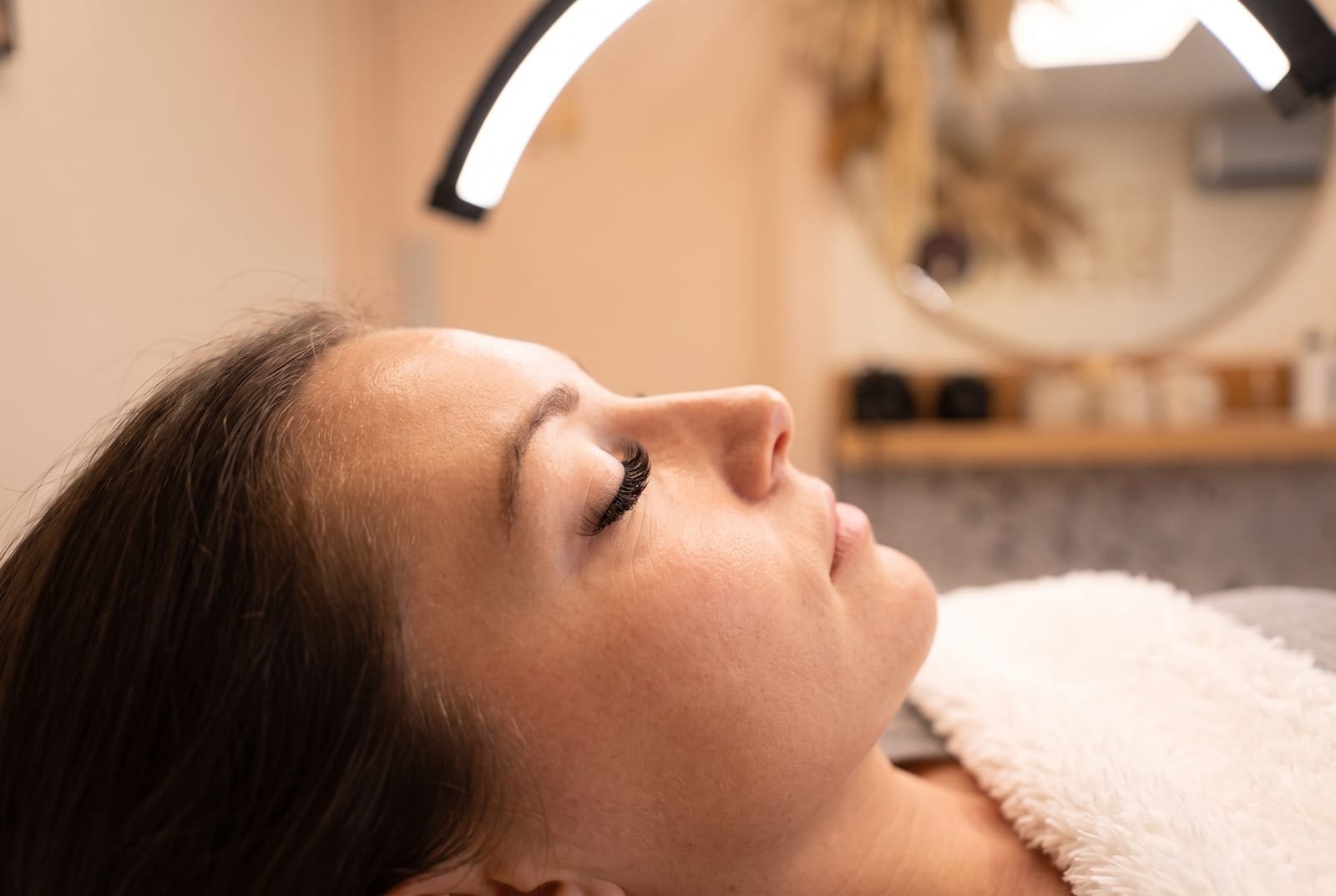
A lash extension is a single synthetic fibre, bonded with a semi-permanent glue to one of your own natural lashes, close to but never touching the skin. Nothing is glued to your eyelid. Depending on how full you want the finish, a technician applies them as classic (one extension per natural lash, the most natural look), hybrid (a mix of single extensions and small fans for extra fullness) or volume (several ultra fine extensions fanned onto a single natural lash for maximum drama). The American Academy of Ophthalmology lists “eyelash extensions use and removal” and “allergies to mascara or extension glue” among the direct causes of eyelash loss it sees, which is a useful, independent confirmation of how the treatment actually works: it rides on your own lashes, for better and for worse (AAO).
The honest timeline: full for two to three weeks, gone by six
Your natural lashes grow, rest and shed on a cycle of roughly six to eight weeks, and the American Academy of Ophthalmology puts the wider healthy range at six to ten weeks, with one to five lashes lost a day being entirely normal (AAO). An extension only lasts as long as the natural lash it is bonded to, so as that lash sheds, the extension goes with it, whether you have had it a day or six weeks.
In practice, most people see a fresh, full set start to look noticeably thinner after two to three weeks, and it is largely grown out by four to six weeks, sometimes stretching to eight with a slow lash cycle and careful aftercare. That is why infills exist: rather than let the set thin all the way out, you top it up every two to three weeks while enough of the original extensions remain to build onto.
A first full set, then the three week infill
Picture a typical first appointment. You come in for a classic or hybrid full set, and for the first two weeks the effect is exactly what you booked it for, longer, darker lashes with no mascara needed. By around week three, the odd gap starts to show as a few natural lashes reach the end of their own cycle and shed, extension and all. That is the point to book an infill rather than wait: a technician fills the gaps while there is still plenty of the original set to work around, and the whole look is refreshed for another two to three weeks. Leave it much past four weeks without a top up, and there is usually too little of the original set left for an infill to make sense, at which point a new full set is the honest recommendation rather than trying to patch a mostly bare lash line.
What actually shortens them
Oil. Oil based cleansers, rich eye creams and oily makeup remover are the single biggest enemy of the bond, breaking the adhesive down far faster than anything else. An oil free, lash safe cleanser is worth the swap.
The first 24 to 48 hours. Keep the set completely dry while the glue fully cures, avoiding steam, saunas, hot showers and swimming.
Sleeping and rubbing. Sleeping face down and rubbing or tugging at your eyes are named across every source as major causes of early shedding. A silk pillowcase, a gentle hand, and brushing daily with a clean spoolie all help.
Mascara. Skip waterproof mascara if you can. If you do want mascara, use only a water based, lash safe formula, since it is usually the scrubbing to remove waterproof formulas, not the mascara itself, that pulls extensions out early.
The safety side lash blogs don’t mention
A 2019 review of documented eyelash extension complications found allergic reactions to the adhesive, not infection or injury, were by far the most common issue.
Most of what ranks for lash extension advice comes from lash suppliers and salons, so the safety side tends to get a light touch. It is worth being straight about it.
The numbers. A 2019 peer reviewed review of 53 documented cosmetic eyelid procedure complications found allergic blepharitis, an inflamed eyelid margin, accounted for 79 percent of them, with smaller numbers of keratoconjunctivitis, conjunctival erosion and contact dermatitis (Masud et al., 2019, PMID 31263720).
Why it happens. The adhesive itself is the mechanism, most lash glues are cyanoacrylate based, and a documented, peer reviewed case report describes a woman who developed swelling, itching and eyelid inflammation within three days of a false lash adhesive, with patch testing confirming a delayed allergy to one of the acrylate compounds in it (Kim & Chung, Annals of Dermatology, 2014).
Why we patch test. This is exactly why the British Association of Dermatologists recommends patch testing before a treatment that uses an adhesive like this, reading the skin at two days and again a few days later, since a genuine allergy can take time to show (BAD).
Traction alopecia. An ophthalmologist quoted by Cleveland Clinic names traction alopecia, natural lash loss from the pull of a set that is too heavy for the lashes underneath, as a recognised risk of a badly sized or badly removed set (Cleveland Clinic, Dr Nicole Bajic). None of this is a reason to avoid extensions. It is a reason to have them applied by a trained technician, with a free patch test beforehand, and removed properly rather than picked off, which is exactly how we do it.
Classic, hybrid, volume, or something else entirely?
It is worth seeing the full, honest set of options side by side, including the ones we do not sell.
| Classic | Hybrid | Volume | Lash lift | |
|---|---|---|---|---|
| What it does | One extension per natural lash | Mix of single extensions and small fans | Several fine extensions fanned per natural lash | Curls and darkens your own lashes, nothing added |
| Look | Natural, subtle length | Fuller, still wearable | Maximum length and drama | Natural, low drama |
| Upkeep | Infill every 2 to 3 weeks | Infill every 2 to 3 weeks | Infill every 2 to 3 weeks, gaps show fastest | None until it grows out |
| At NU Beauty | Haverhill only | Haverhill only | Haverhill only | Both salons |
If low maintenance matters more to you than maximum length, our own lash lift and tint is the honest alternative: no infills, four to six weeks per treatment, and it is available at both our Haverhill salon and NU Studio in Kedington. It curls and darkens the lashes you already have rather than adding to them, so it suits a lower effort routine better than extensions ever will.
There are also options we deliberately do not sell. Reusable or single use strip lashes are the lowest cost, lowest commitment route, glued along the lash line rather than to individual lashes and taken off daily, and magnetic lashes avoid glue altogether using a magnetic liner, though both are a daily cosmetic rather than a lasting treatment. We would also steer you away from at home DIY extension kits. Applied in a salon, extensions go on in a controlled setting with a trained technician and quality checked adhesive. Self applied, the named risks are real: corneal injury from being poked too close to the eye, chemical irritation from adhesive fumes, infection from unsanitised tools, and accidentally damaging your own lashes on removal (All About Vision). It is one of those treatments genuinely better left to someone trained to do it.
What lash extensions cost at NU Beauty
At our Haverhill salon, a full set of classic lashes is currently £66, hybrid or volume is £71.50, and mega volume is £82.50. Infills run from £14.50 up to £55 depending on how much work is needed, and a lash removal, if you ever want a set taken off properly rather than picked at, is £16.50. Across the UK, classic sets commonly run from around £50 to £135, with hybrid and volume running higher again, so our prices sit toward the lower to middle end of what you would pay for the equivalent style elsewhere. Every first set includes a free patch test, and lash extensions are currently offered at our Haverhill salon only. If it is your brows you would like sorted at the same time, our guide to what HD brows are covers the shaping treatment we offer alongside.
The bottom line
A fresh set of lash extensions looks its fullest for about two to three weeks and is fully grown out by around six, because each extension is only ever as permanent as the single natural lash it rides on, not the glue holding it there. Book the infill in that window rather than after it, keep oil and rubbing away from the lash line, and a set genuinely stays looking good appointment to appointment. If maximum length and drama sound worth the upkeep, come and see us in Haverhill for a free patch test and we will find the set that suits your own lashes.
Frequently asked questions
How long do lash extensions last before a fill?
Most people book an infill every two to three weeks, while roughly forty percent or more of the set is still in place. Leave it much longer than that and you are usually better off with a full new set than an infill, because too few original extensions are left to build back onto.
What are the negatives of eyelash extensions?
The honest list: the ongoing cost and time of regular infills, the aftercare rules around oil and water, and a real, if uncommon, risk of an allergic reaction to the adhesive. A 2019 review of documented eyelash-extension complications found allergic blepharitis, an inflamed eyelid margin, was by far the most common issue, which is exactly why a patch test matters.
Do lash extensions make your natural lashes thinner?
Correctly applied and properly removed extensions should not weaken your own lashes. The risk is traction alopecia, hair loss from the pull of extensions that are too heavy or too long for the natural lash underneath, or from picking a set off rather than having it soaked away. A trained technician sizing your set to your own lashes, and you leaving removal to us, is what avoids it.
Can you shower with lash extensions?
Not for the first twenty four to forty eight hours, while the adhesive fully cures. After that, showering is fine, though an oil free cleanser and patting rather than rubbing the area dry will help the set last.
Who should not get lash extensions?
Anyone with a known allergy to adhesive or acrylate compounds, or a history of eyelid contact dermatitis, should talk to us first and expect a patch test. If your natural lashes are already very short, sparse or fragile, extensions have less to bond to and a lash lift is usually the better, gentler route.
How much do lash extensions cost?
At NU Beauty in Haverhill, classic full sets are the most affordable, with hybrid, volume and mega volume priced above that, and infills priced by how long they take. You will find the current prices on our brows and lashes menu. Across the UK, classic sets commonly run from around fifty to over a hundred pounds depending on salon and style, and ours sit toward the lower to middle end of that range.