The short answer
The honest answer is patience: over-plucked or waxed brows usually show new hairs within two to six weeks and look full again within a few months, as long as you stop touching them and the follicle is still alive.
Almost everyone has a brow story they would rather forget, whether it is a decade of over-plucking, one enthusiastic threading appointment, or a razor slip that took more than you meant it to. The question that follows is always the same, and it is a fair one: how long until they come back? Here is the honest, dermatology-backed answer, why brows behave the way they do, and how to help them look their best in the meantime.
So, how long does it actually take?
If you pulled the hair out by the root, by plucking, waxing or threading, expect the first fine new hairs within about two to six weeks, a noticeably fuller brow by two to three months, and a full mature shape at up to around six months. If you only shaved or trimmed, the hair is already sitting in the follicle, so it grows straight back out with no real delay. So if you have taken the scissors too far and trimmed your brows too short, that is the quickest of all to fix, usually just a couple of weeks, because you have not touched the follicle at all.
Here is the honest week-by-week picture for brows that were plucked, waxed or threaded, drawn from what dermatologists and the research actually show rather than a hopeful guess:
| Time since plucking, waxing or threading | What to expect |
|---|---|
| Weeks 1 to 2 | Nothing to see yet, while the follicle quietly restarts its growth phase |
| Weeks 2 to 6 | The first fine, pale new hairs push through (Medical News Today) |
| 2 to 3 months | A noticeably fuller brow, and a fair point to judge how it is going (Cleveland Clinic) |
| 4 to 6 months | A full, mature brow; in one controlled study a shaved brow was indistinguishable from the other by now |
The reason brows take a while, and never grow long like the hair on your head, comes down to their growth cycle. Every hair goes through a growth phase, a short transition, and a resting phase before it sheds. Scalp hair stays in its growth phase for years, which is why it gets long. Brow hair stays in growth for only two to three months, so it reaches a set length and stops. Pull one out and the follicle has to start that whole cycle again from scratch, which is why root removal takes weeks to show and shaving does not.
Brows do not grow back thicker after shaving. The hair was always that thick under the skin; you are just seeing the blunt cut end as it grows out.
That last point is worth saying plainly because the myth is so stubborn. In a small controlled study, volunteers had one eyebrow fully shaved, and once regrown, observers could not tell which side had been shaved. No thicker, no darker, no faster.
How the method changes the wait
| Shaved or trimmed | Plucked, waxed or threaded | |
|---|---|---|
| What happened to the hair | Cut at the surface, follicle untouched | Pulled out from the root |
| First regrowth showing | Straight away, it is already there | About two to six weeks |
| Full, even brow | Weeks | Up to around six months |
| Grows back thicker? | No | No |
What years of over-plucking really does
Here is where honesty matters most, and it is a conversation we have often at a brow consultation. Say you plucked your brows pencil-thin in your teens and kept at it for years, then decided to grow them out. For the first few weeks it feels like nothing is happening. Around week three or four, fine pale hairs start to appear, easy to miss unless you look closely. By month two there is enough to see a shape forming, and this is the moment most people crack and reach for the tweezers again, which resets the clock. Leave it fully alone and by around four months there is a real brow to work with.
The one honest caveat is that regrowth only works while the follicle is alive. Cleveland Clinic dermatologist Dr Shilpi Khetarpal is clear that plucking the same hairs every single day for years can scar the follicle, and a scarred follicle will not grow a new hair. It is not the usual outcome, and most brows do recover, but if a patch has stubbornly refused to grow after months of being left alone, that follicle may simply be gone.
What actually helps, and what does not
The uncomfortable truth is that nothing makes a healthy follicle grow faster than its own natural pace. What genuinely helps is stopping the removal and being patient. Everything else is either about looking after the hairs you have, or about faking density while you wait.
None of that is on our menu, and we would rather tell you the truth than sell you a serum. If your brows are growing back, the best value is almost always patience plus a little help making them look good along the way.
Making your brows look good while they grow back
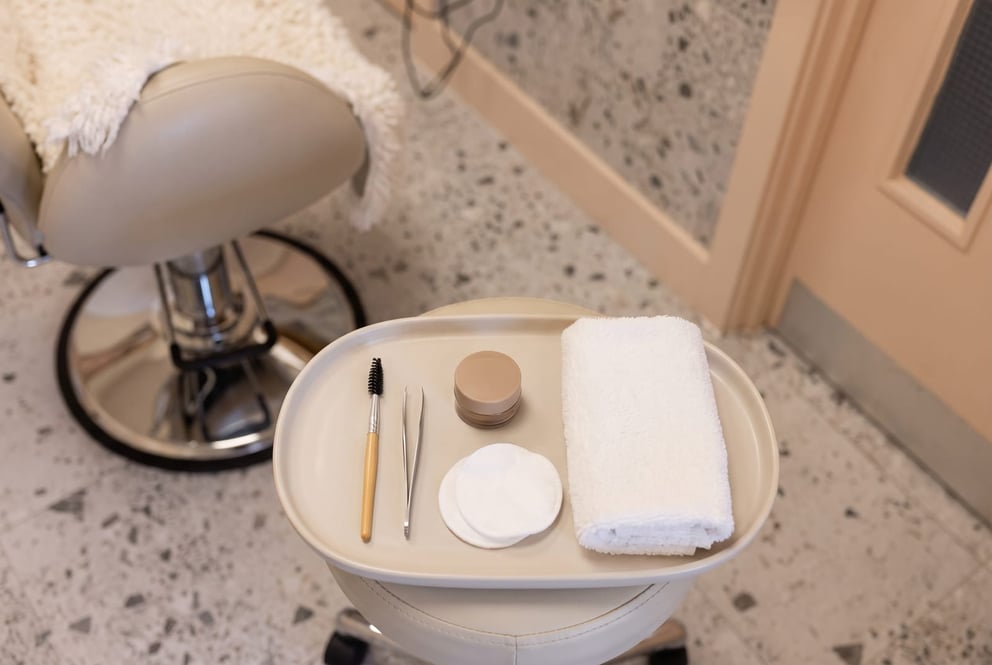
This is the part we can actually help with. We cannot speed the hair up, but we can make a sparse, growing-out brow look full and intentional rather than patchy.
A brow tint darkens the fine, pale regrowth so those wispy new hairs read as part of the brow rather than invisible, which often makes brows look fuller straight away, from £10. Brow lamination relaxes and sets your own hairs so more of each one is on show, brushed up and even, which is brilliant for gappy or downward-growing brows while they fill in, from £42. And a professional shape is really about restraint on an over-plucked brow: tidying only around the shape you are growing towards, never taking more off. If you want that mapped out properly, our HD brows treatment does exactly that at our Haverhill salon, from £44.
If you would rather talk it through first, pop into Haverhill or NU Studio in Kedington and we will look at what you are working with and give you an honest plan, even if that plan is simply to leave them alone for a couple of months.
So, be patient (mostly)
Over-plucked or waxed brows almost always grow back, usually with the first hairs in a few weeks and a proper brow within a few months, as long as you resist the tweezers and the follicle is still alive. Shaving grows back faster and no thicker. If a brow stubbornly refuses to return, or the loss came on suddenly, that is a GP conversation rather than a beauty one. And while you wait, a tint or a lamination will make the most of every hair you have, without anyone pretending it grew them for you.
Frequently asked questions
How long do eyebrows take to grow back after plucking or waxing?
Usually the first new hairs appear within about two to six weeks, a timescale both Medical News Today and the Wimpole Clinic put on record, and the brow looks meaningfully fuller by two to three months. A full, mature brow can take up to around six months, because eyebrow hair has a short growth phase and each hair has to regrow from the root after it has been pulled out. The exact timing depends on your age, your genetics and how often the area has been plucked or waxed over the years.
Do eyebrows grow back if you shave them?
Yes, and usually faster than after plucking, because shaving only cuts the hair at the surface and leaves the follicle untouched, so the hair is already there and simply grows out. In a small controlled study where volunteers had one eyebrow shaved, all of them regrew, and within four to six months observers could not tell which brow had been shaved. Shaving does not make the hair grow back thicker or darker either, despite the common myth.
Can over-plucking damage your eyebrows so they never grow back?
It can, but it is the exception rather than the rule. Cleveland Clinic dermatologists say that plucking the same hairs day after day for years can traumatise and eventually scar the follicle, and a scarred follicle will not grow a new hair. Most of the time, though, brows do grow back once you stop plucking and give them a few months. If a follicle has genuinely been lost, only a pigment treatment like microblading or a hair transplant will fill that gap, because no serum or oil can wake a dead follicle.
How can I make my eyebrows grow back faster?
The single most effective thing is to stop plucking, waxing and threading the area completely and let the full growth cycle run, which takes a couple of months. Brushing the brows gently and keeping the skin healthy will not speed up the follicle, but they help the hairs you have look their best. Correcting a genuine deficiency, such as low iron, can help if that is the cause. There is no cream or oil that reliably makes a healthy brow grow faster than its own natural rate.
Does castor oil actually grow eyebrows?
There is no clinical evidence that castor oil grows new brow hair or makes it grow faster. It is a rich oil that coats and conditions the hairs you already have, so brows can look glossier and healthier, which is easy to mistake for growth. It is cheap and mostly harmless, though it can irritate the skin near the eye in some people. If you enjoy the ritual it does no harm, but do not expect it to fill a gap where the hair is not growing.
Does Vaseline help eyebrows grow back?
No. Like castor oil, Vaseline does nothing to make hair grow, because it cannot reach or wake up the follicle. All it does is sit on top of the skin and hairs and hold in moisture, so your brows may look a little smoother and shinier, which is easily mistaken for growth. It will not fill a sparse patch or speed up regrowth. It is harmless enough as a conditioner, but if you want the hair back, the only things that work are patience while a live follicle regrows, or a clinical option for a follicle that has genuinely gone.
I trimmed my eyebrows too short, how long will they take to grow back?
Trimmed brows are the quickest of all to recover, usually just a couple of weeks, because scissors only shorten the hair at the surface and leave the follicle completely untouched, so the hair simply keeps growing from where it was cut. That is much faster than plucking or waxing, which pull the whole hair out and have to regrow it from scratch. The hardest part is resisting the urge to keep tidying or evening them up while they are awkward, because that is how a quick trim turns into weeks of waiting. Brush them into place and leave them be.
When should I see a doctor about eyebrows that will not grow back?
See a GP if brow loss is sudden, comes in patches, takes out a whole section such as the outer third, appears alongside other symptoms like tiredness or weight change, or simply has not regrown after several months of leaving it alone. Slow or absent regrowth can be a sign of a thyroid problem, an autoimmune condition such as alopecia areata, or frontal fibrosing alopecia, where eyebrow loss is often the first sign. These are worth catching early, and most causes are treatable.