The short answer
Taking acrylics off at home is mostly patience: file off the shine, soak in pure acetone and foil, then gently push, never pry. The soak is the easy part; rush it and you tear the top layers off your nail.
Acrylics look brilliant right up until the point you want them off. Then you are left with ten hard little shells, a growing gap at the cuticle, and the very strong temptation to just pull. Please do not pull. Almost everything people hate about acrylics, the thin, peeling, sorry-looking nails left behind, comes from that one move, not from the acrylic itself.
The good news is that taking them off at home is genuinely doable, and it is mostly a matter of patience rather than skill. Here is how to do it without wrecking the nail underneath, when the kitchen-cupboard tricks are worth trying, and the point where it is honestly easier to let someone else do it.
The safe way to take acrylics off at home, step by step
Set aside a proper half hour, sit somewhere you do not mind smelling of acetone for a bit, and work one hand at a time so you are not stuck.
- Clip the length down. Take the extension back as close to your own nail as is comfortable with clippers. Less acrylic to dissolve means a much shorter soak.
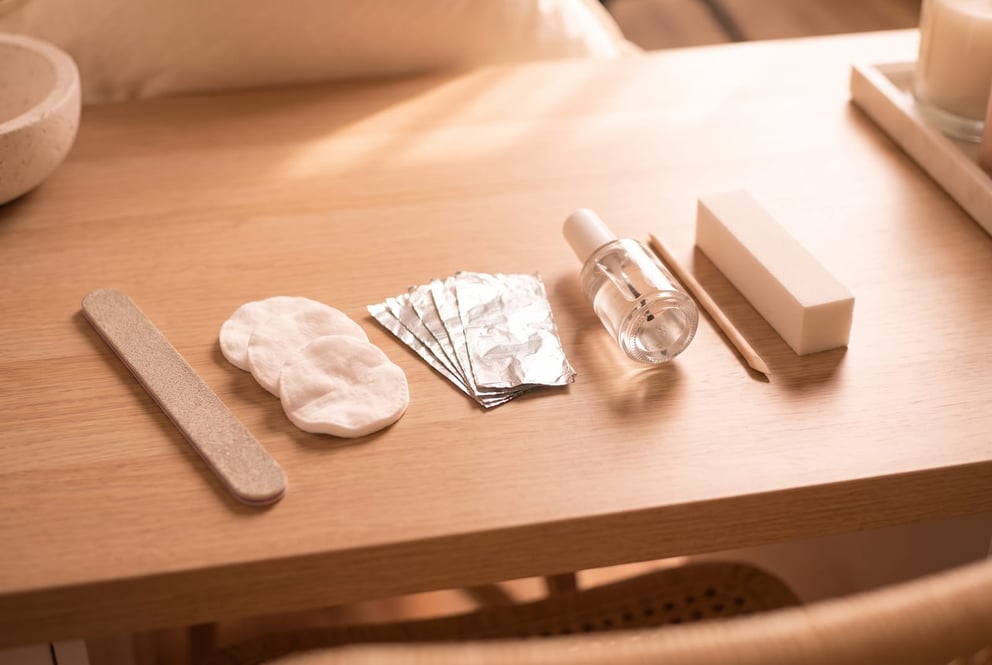
- File off the shine. With the coarse file, buff away the glossy top coat until the surface looks dull. That top layer is sealed, and acetone cannot get through it, so this step is what makes the whole thing work. Thin the bulk of the acrylic down too, but stop before you reach your own nail.
- Protect your skin. Rub a little petroleum jelly or cuticle oil into the skin around each nail. Acetone is very drying on skin and this keeps it comfortable.
- Soak in pure acetone. Soak a cotton pad in 100 percent acetone, press it onto the nail and wrap it snugly in a small square of foil, or use a reusable soak-off clip if you have them. The foil traps your body heat and stops the acetone evaporating, so it works faster. The American Academy of Dermatology suggests soaking only your fingertips, not your whole hand. Work in a well-ventilated room and keep the acetone well away from any flame, as it is flammable. Leave it about fifteen to thirty minutes; a thick set takes longer.
- Push, do not pry. Unwrap one nail. The acrylic should look soft and gummy and lift with light pressure from a wooden pusher, working from the cuticle towards the tip. If it drags or resists, it is not ready: wrap it back up and give it another five to ten minutes. This is the whole game, so it is worth repeating: if it does not lift off with gentle pressure, it needs more soaking, not more force.
- Buff, then drown them in oil. Once every trace is off, smooth the surface with a light buff, wash your hands, and rub in cuticle oil and hand cream. Your nails will look a bit dull and feel bendy. That is normal, and it passes.
What actually happens when you pull them off
A client came in last summer three days before a wedding, having caught one acrylic on a car door and, in the panic, worked the rest off with her thumbnail over an evening. What she had underneath were nails with pale, chalky patches where the top layers of the plate had come away with the acrylic, tender in a couple of spots, and far too thin to take a fresh set straight away. We buffed them smooth, oiled them, and put a sheer builder gel over the top to protect them for the day, but the honest fix was time.
That is the thing to understand. When you pry acrylic off, it does not let go cleanly. It brings layers of your actual nail with it, which is why the American Academy of Dermatology is blunt about never peeling enhancements off. Dermatologists recognise this sort of trauma, including onycholysis, where the nail lifts away from its bed, as a real risk of forcing enhancements off, and those layers do not grow back overnight.
Can you take acrylics off without acetone?
This is the most-searched question on the topic, and the honest answer is a qualified yes, with a warning. You can soak your nails in warm, soapy water with a splash of oil for twenty to thirty minutes to soften the edges, then gently ease the acrylic up with a cuticle stick. The methods you will see online using dental floss or a bank card work on the same idea of getting under a loosened edge.
The problem is that none of these properly dissolve the acrylic the way acetone does, so they rarely take a whole set off cleanly, and that is exactly when people give up and start prying. Every no-acetone method is really just a slower road to the same fork: soak until it genuinely lifts, or force it and pay for it later. If you would rather not have acetone in the house at all, a salon soak-off is the cleaner answer than a bank card.
At home or in the salon? An honest comparison
There is no wrong answer here. It comes down to how much time, patience and mess you are up for, and the state of your nails.
| Doing it yourself | A salon soak-off | |
|---|---|---|
| Time | A patient 30 to 45 minutes | Usually under 30 minutes |
| Cost | A bottle of acetone and foil | Around £18 with us, or £30 if applied elsewhere |
| Risk to your nail | Low if you never force it, high if you rush | Lowest, a tech stops before any damage |
| The nail checked over | Only by you | Yes, and any thinning or lifting spotted early |
| Best for | A confident, gentle hand with time to spare | Thick or stubborn sets, sore nails, or if you would just rather not |
If you land on the salon option, that is what an acrylic removal is: we soak them off gently, no drilling your natural nail, and check the plate as we go. It is available at both our Haverhill and Kedington salons.
A kinder set next time
If you come off acrylic tired of the thinning and the harsh removal, it is worth knowing acrylic is not your only option for length and strength. Builder gel, often sold as BIAB, soaks off in acetone rather than needing heavy filing, flexes with your nail instead of sitting rigid on top, and can be infilled rather than fully stripped every few weeks. It will not give you the extreme length and toughness a full acrylic sculpt does, but for most people who just want a strong, tidy natural nail, it is gentler over the long run. Our what is BIAB guide walks through it, and if you are weighing colour options, how long gel nails last covers the wear side. And if you are planning a fresh look, here are some autumn nail ideas to bring to your next appointment.
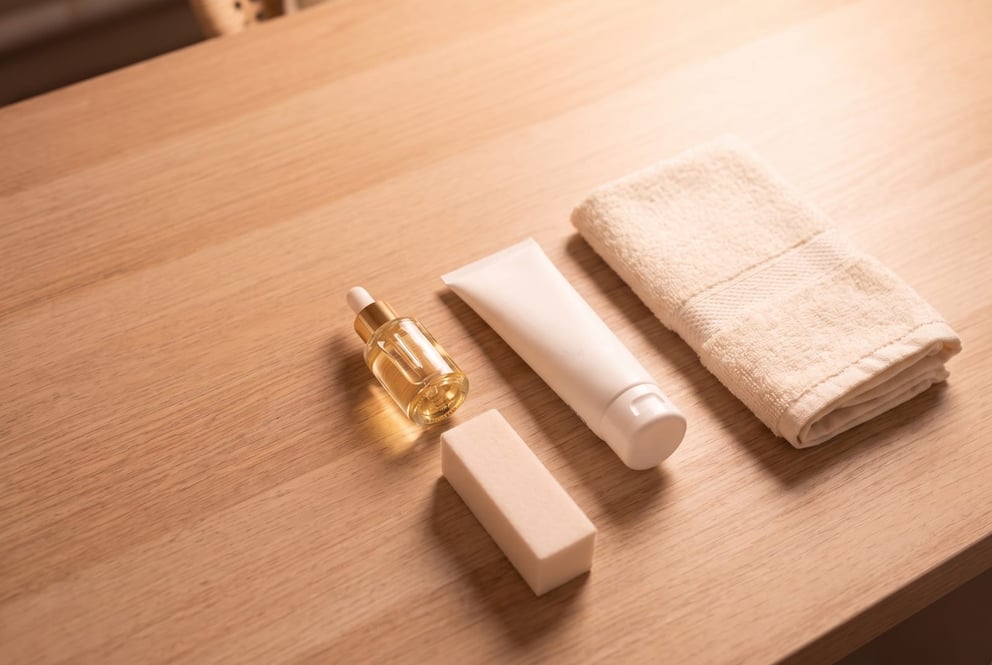
Whatever you go for next, give your nails a breather first. The American Academy of Dermatology recommends time without any enhancement so the nail can repair, so a week or two of nothing but daily cuticle oil is the best thing you can do. A bare manicure to tidy and buff them is a nice halfway house while they harden back up.
So, should you take them off yourself?
If your nails are healthy, you have 100 percent acetone and a spare half hour, and you can promise yourself you will not force a single one, then yes, do it at home. The acetone does the work; your only job is patience. If the set is thick, a nail already feels sore, or you can feel your willpower to keep soaking running out, that is the moment to let someone soak them off for you instead. Either way, the nails you keep are worth the extra ten minutes it takes to do it gently.
Frequently asked questions
How do you get acrylic nails off at home?
Clip the length down, then use a coarse nail file to buff off the shiny top layer so acetone can get in. Soak a cotton pad in 100 percent pure acetone, press it onto the nail, wrap it in a small square of kitchen foil, and leave it for around fifteen to thirty minutes. When the acrylic has gone soft and gummy, gently push it off from the cuticle towards the tip with a wooden cuticle pusher. If it resists, wrap it back up and soak for another five to ten minutes. The one rule that matters more than any other is never to force, pick or peel it, because that is what tears the top layers off your natural nail.
Can you take acrylic nails off without acetone?
You can soften the edges with a long soak in warm soapy water and a little oil, then ease the acrylic up with a cuticle stick, but it is slower and far less reliable than acetone because it does not properly dissolve the product. The danger with every no-acetone method, including the dental floss and old bank card tricks doing the rounds online, is that when the acrylic will not budge people start prying, and prying is exactly what damages the nail. If you would rather skip acetone entirely, the safest route is a professional soak-off. Ordinary nail polish remover will not work well either, as it is too diluted to break acrylic down.
Why won't my acrylic nails come off with acetone?
Almost always it is one of two things. Either you have not filed off the glossy top layer, so the acetone cannot reach the acrylic underneath, or you have not soaked for long enough. Acrylic is a hard, thick product and it genuinely takes fifteen to thirty minutes, sometimes longer on a thick set, to go soft. Cold acetone also works more slowly, which is why the foil wrap helps: it traps your body heat and stops the acetone evaporating. If it is still solid, the answer is more soaking, not more force.
Does removing acrylic nails damage them?
Removing them properly does not. The damage people blame on acrylic almost always comes from how it was taken off, not the acrylic itself. Prying or picking a set off pulls away layers of the natural nail plate, which is why the American Academy of Dermatology says never to peel enhancements off and to soak them in acetone instead. There is also some unavoidable thinning from the filing that gets acrylic to stick in the first place, so your nails will feel thinner and more bendy for a while afterwards. That is normal, and with cuticle oil and a couple of weeks off they recover.
How much does it cost to get acrylics removed at a salon?
Across UK salons a standalone acrylic soak-off usually runs somewhere around ten to thirty pounds, and it is often cheaper, or included, if you rebook a new set at the same time. Ours sits at the lower end of that range, a little more if the acrylics were applied somewhere else, because an unknown product and prep takes longer to soak off safely and we want to check the nail as we go. You can see the current removal and manicure prices on our nails menu, and a bare manicure to tidy the natural nail afterwards is a nice halfway house while it recovers.
How long do nails take to recover after acrylics?
Give them a week or two without any enhancement and they will feel much better; a full grow-out of any real damage takes longer, because fingernails only grow about three millimetres a month, so a nail grows out completely in roughly four to six months. Rub petroleum jelly or cuticle oil into the nail and the skin around it every day, keep them fairly short while they harden back up, and hold off on the next set for a couple of weeks. If a nail is sore, lifting or looks discoloured, have it looked at rather than covering it with another set.